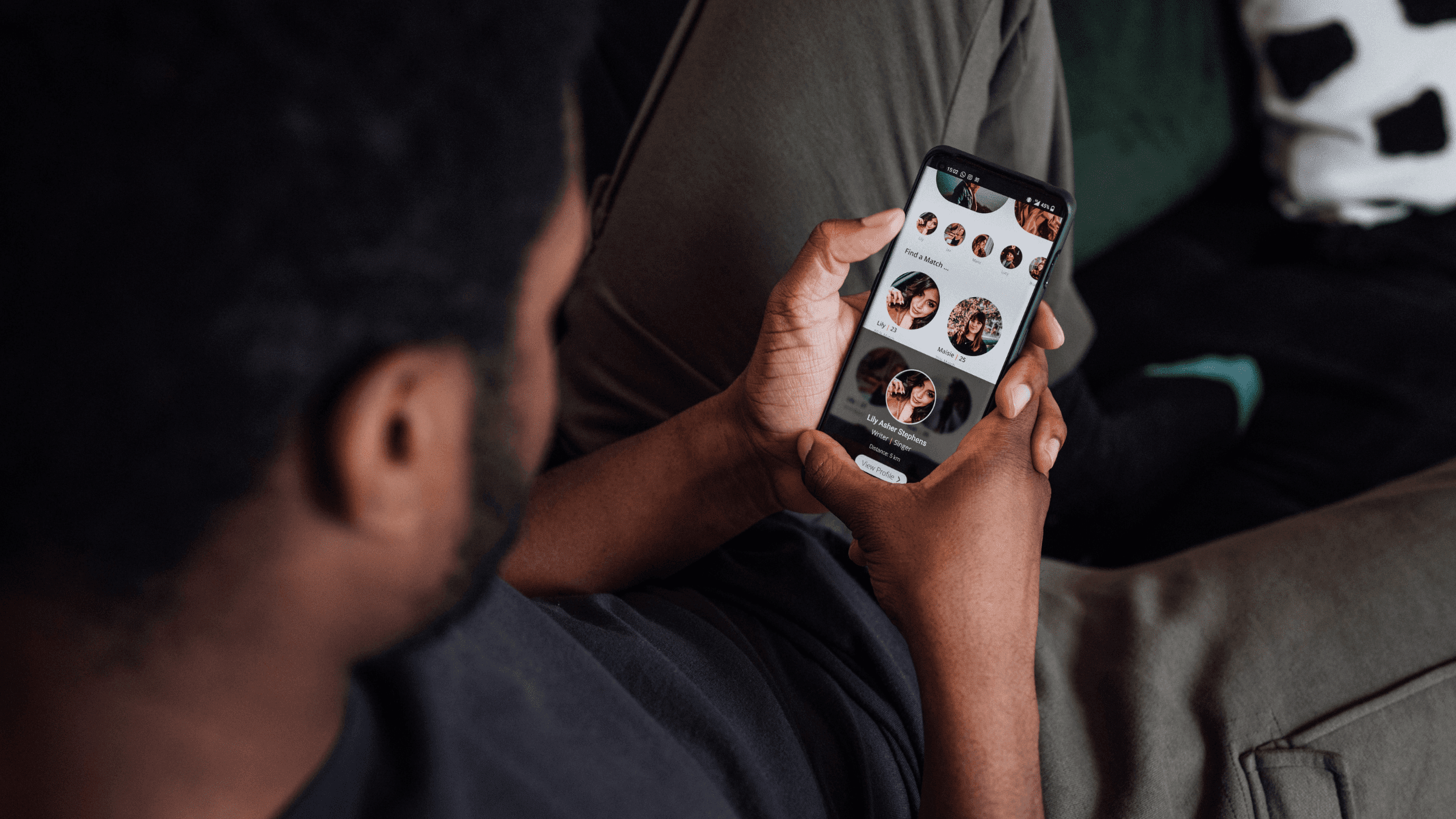
You open the app even though you told yourself you wouldn’t.
Maybe you’re lonely, bored, or have had a difficult day and want to feel wanted. Maybe you’re frustrated with your relationship, disconnected from your partner, or simply restless and looking for something to change how you feel.
You swipe.
Someone matches. For a moment, something shifts. You feel attractive. Desired. Relieved. Interested. Less alone.
Then the feeling fades, and you find yourself checking again.
For some people, this becomes a pattern that is difficult to control. The problem isn’t necessarily how much time you spend on dating apps. The more important question is what the behavior has come to do for you.
You may genuinely want a relationship. You may genuinely love your partner. And you may still find yourself checking whether someone else wants you.
That is part of what makes dating app addiction so confusing. The behavior can be about dating, sex, novelty, reassurance, escape, or validation. It can also be about several of these factors at once.
And sometimes what you’re looking for isn’t really another person.
You’re looking for relief.
Relief from loneliness, insecurity, boredom, feeling undesirable, or the uncertainty of not knowing whether someone wants you.
But relief is not the same thing as connection.
Over time, this pattern can also begin to affect your real relationship, making it more difficult to tolerate vulnerability, stay present with your partner, and experience intimacy.
What Is Dating App Addiction and Compulsive Dating App Use?
Compulsive dating app use is not simply frequent app use. Some people use dating apps often without experiencing significant problems. The more important question is whether the behavior still feels chosen or if it increasingly feels like something you have to do.
For some people, dating-app use can take on the repetitive and difficult-to-control qualities seen in other problematic behaviors. The motivation can also shift.
At first, you may use the app to meet someone. Over time, you may find yourself using it because you want to feel attractive, wanted, distracted, sexually stimulated, or less alone.
Those motivations can exist together. Wanting a relationship doesn’t mean you aren’t also seeking validation.
A useful question is: “Has validation become more important than connection?”
This can happen whether you’re single or partnered.
A man may have no real intention of leaving his relationship or pursuing another partner. He may still return to dating apps because they provide something he’s struggling to find elsewhere: novelty, sexual attention, reassurance that he is still desirable, escape from conflict, or a temporary sense of possibility.
For a partner who discovers this behavior, that can be deeply confusing. She may think, “If you love me, why are you doing this?”
Sometimes the answer is not simply that the person wants someone else. The behavior may be expressing something he hasn’t learned how to handle directly.
Why Dating Apps Are Built To Be Habit-Forming
Dating apps create a particular environment. There is always another possibility, immediate feedback is available, and the reward is unpredictable.
You don’t know when the next match will appear, who will respond, whether they will be attractive to you, or whether the conversation will lead anywhere.
Then someone responds.
That uncertainty matters because intermittent reinforcement can make a behavior more persistent. The reward doesn’t happen every time, so each new attempt carries the possibility of something rewarding.
Dating apps can therefore create a powerful cycle of anticipation, checking, reward, and disappointment. This doesn’t mean every person who uses an app is caught in an addictive process. It means that unpredictable attention can make repeated checking easier to reinforce.
Amir Levine’s attachment work provides a useful lens for looking at this issue. His recent book Secure: The Revolutionary Guide to Creating a Secure Life, emphasizes consistency, availability, responsiveness, reliability, and predictability as important elements of secure connection.
Dating apps can expose someone to an endless stream of the opposite experience.
Someone matches and then disappears.
Someone responds enthusiastically and then stops.
Someone you find attractive doesn’t match with you.
Someone else suddenly shows interest.
If you’re already insecure or have attachment issues, these fluctuations can become emotionally significant.
And this brings us back to the difference between relief and connection.
A match can temporarily make it seem like someone wants you. For a moment, the loneliness, insecurity, and uncertainty quiet, but the underlying need hasn’t necessarily been met.
Signs Swiping Has Become a Compulsive Pattern
If not everyone who frequently uses a dating app has a problem, how do you know if it’s become an issue for you?
Signs of dating app addiction include when you:
- Spend increasingly more time on dating apps or check them repeatedly throughout the day
- Use these apps secretly or minimize how much time you spend on them
- Continue using these apps after deciding to stop or take a break
- Turn to the app when you are lonely, anxious, bored, rejected, frustrated, or sexually restless
- Get in a better or worse mood depending on whether you’re getting attention on the app
- Keep swiping even when you feel exhausted by dating
- Become increasingly focused on matches, sexual attention, novelty, or fantasy rather than getting to know someone
- Use the apps while in a committed relationship despite recognizing that the behavior creates secrecy, conflict, or distance.
One of the clearest ways to understand the pattern is to look at what happens before, during, and after you use the app.
Maybe you have a difficult day. You feel lonely or dissatisfied with yourself. You pick up your phone almost automatically. You swipe. You get a match and feel a little better. You start messaging. Maybe the person responds, and you feel desirable again. Maybe they don’t, so you keep swiping. Eventually you put the phone down, but the loneliness hasn’t really changed. Later, you check again.
The app didn’t solve the feeling.
It temporarily changed your relationship to the feeling.
That temporary relief can become the reason you return.
How Compulsive App Use Connects To Compulsive Sexual Behavior
For some people, dating-app use becomes part of a broader pattern of compulsive sexual behavior.
The behavior may change, but the underlying cycle can remain similar:
discomfort → seeking stimulation or validation → temporary relief → return of discomfort → repetition
Dating apps can make this cycle especially accessible because romantic, sexual, and emotional attention can all be found in the same place.
For someone dealing with compulsive sexual behavior, the app may become another way to pursue novelty, arousal, fantasy, or validation.
If you have a partner, the behavior may also serve as an escape from something happening within you or in your relationship. You may feel:
- Disconnected from your partner but not know how to repair the distance
- Undesirable and look for evidence that you still have sexual appeal
- Bored, restless, lonely, or emotionally shut down
You may not consciously think, “I’m going to avoid this feeling by using a dating app,” but you still reach for your phone.
That’s why understanding the function of the behavior is often more useful than focusing only on the behavior itself.
The Impact on Real Relationships and Self-Worth
Dating app addiction can affect a person’s ability to tolerate the vulnerability and limitations of actual intimacy. The app offers endless possibility. Real relationships do not. They require choosing one person and discovering that they are imperfect. They require disappointment, negotiation, vulnerability, communication, and repair.
For someone with an intimacy disorder, the endless possibility of the app can make it easier to remain interested in connection without having to stay present for all of the discomfort that connection requires.
Dating apps can make it possible to remain perpetually oriented toward intimacy without necessarily becoming more capable of intimacy or nourished by the wholeness that intimacy can bring to our lives.
Attachment patterns can contribute to this. But the more useful question isn’t simply, “What is my attachment style?”
It’s “What happens when uncertainty, rejection, desire, or closeness activates something in me, and what do I do next?”
If you become anxious about rejection, you may repeatedly seek reassurance through matches and messages. If you tend to protect yourself through distance, you may use the possibility of new connections to avoid becoming vulnerable with one person.
The pattern is different, but the clinical question is similar: “Can you stay present with what is happening inside you without immediately reaching for relief?”
Self-esteem can become caught in the same cycle. A match may feel like proof that you’re attractive. A lack of attention may feel like proof that you aren’t.
But another person’s interest can’t provide a stable foundation for self-worth.
A more durable sense of self-esteem is built through action: how you treat people, what you tolerate, what you communicate, how you handle disappointment, and whether your choices reflect the person you want to be.
Breaking the Pattern
Breaking a compulsive pattern doesn’t necessarily mean deleting the app forever. Instead, you may want to:
- Take a break
- Put limits on the app, like creating specific times or days that you use it
- Turn off notifications
These kinds of boundaries can help create enough space to recognize when use has become automatic.
But if the app serves a deeper emotional function, removing it doesn’t automatically resolve the underlying need.
Start by becoming curious about the moments when you reach for it. Consider:
- What happened just before I opened the app?
- What was I feeling?
- What was I hoping the next match or message would change?
And then an important relational question: “Is this behavior helping me move toward the relationship I want or helping me avoid the vulnerability required to have it?”
Recovery also involves developing the capacities that make real connection possible, like:
- Tolerating uncertainty without immediately seeking reassurance
- Distinguishing attraction from compatibility
- Managing sexual and romantic disappointment without immediately seeking another source of stimulation or validation
- Developing self-esteem through action rather than external validation
- Staying present when intimacy becomes uncomfortable
It also means developing social resilience by becoming more willing to initiate conversations, tolerate awkwardness, risk rejection, recover from disappointment, and connect with people without the control and distance an app can provide.
The goal is not simply to stop swiping. It’s to understand what you are trying to get from the swipe and to develop more direct, sustainable ways to meet that need.
Address Compulsive Digital Behaviors With BAI
At Begin Again Institute, compulsive digital behaviors are understood within the larger context of your relationship with sex, intimacy, emotions, and self-worth.
For some men, dating apps are one expression of a broader pattern of compulsive sexual behavior. For others, they may be more closely connected to loneliness, insecurity, avoidance, or difficulty tolerating intimacy. Either way, the pattern didn’t develop overnight, and it isn’t something you have to figure out or stop on your own.
Treatment at BAI is provided exclusively by Certified Sex Addiction Therapists (CSATs) and focuses on understanding what the behavior is doing for you, addressing the pattern underneath it, and developing healthier ways to manage emotions, build self-esteem, tolerate vulnerability, and create the kind of relationship you’re actually looking for. Our 14-Day Men’s Intensive offers that depth of work in a structured, confidential setting.
If dating app use has created distance, secrecy, or conflict in your relationship, your partner doesn’t have to navigate that alone either. Our Partner Intensive Program provides dedicated support for partners working through betrayal trauma and rebuilding trust.
The goal isn’t simply to stop swiping. It’s to understand the pattern underneath the behavior — and develop the capacity to relate differently. Reach out to our Care Team today to speak confidentially with a Care Navigator about what the path forward could look like for you.
Frequently Asked Questions
Is dating app addiction a recognized diagnosis?
Not as a formal clinical diagnosis. But research is increasingly identifying problematic dating-app use as a distinct pattern with addiction-like features: preoccupation, mood modification, escalating use, difficulty stopping, and conflict with other areas of life. For many men, it functions as one expression of a broader pattern of compulsive sexual behavior.
Can you be addicted to dating apps while in a committed relationship?
Yes. A man may have no intention of leaving his relationship and still find himself returning to dating apps for novelty, reassurance, or escape. The behavior isn’t necessarily about wanting someone else; it’s often about managing a feeling he hasn’t learned to handle directly.
How do I know if my dating app use is a problem, or just a normal amount of use?
Frequency matters less than function. Ask whether the behavior still feels like a choice, whether you’ve tried to cut back and found yourself unable to, and whether it’s creating secrecy, conflict, or distance in your real relationships. If validation has become more important than connection, that’s worth paying attention to.

Seth’s work goes beyond the clichés of therapy. He meets men in the honest, often uncomfortable space where real change actually happens—facing the patterns that keep them stuck in disconnection, shame, or performance.
His background in wilderness therapy, work as a family therapist at The Meadows, and training in Terry Real’s Relational Life Therapy, shape a style that uniquely works for men in it’s grounded care, and firm directness towards the truth of relational integrity.