
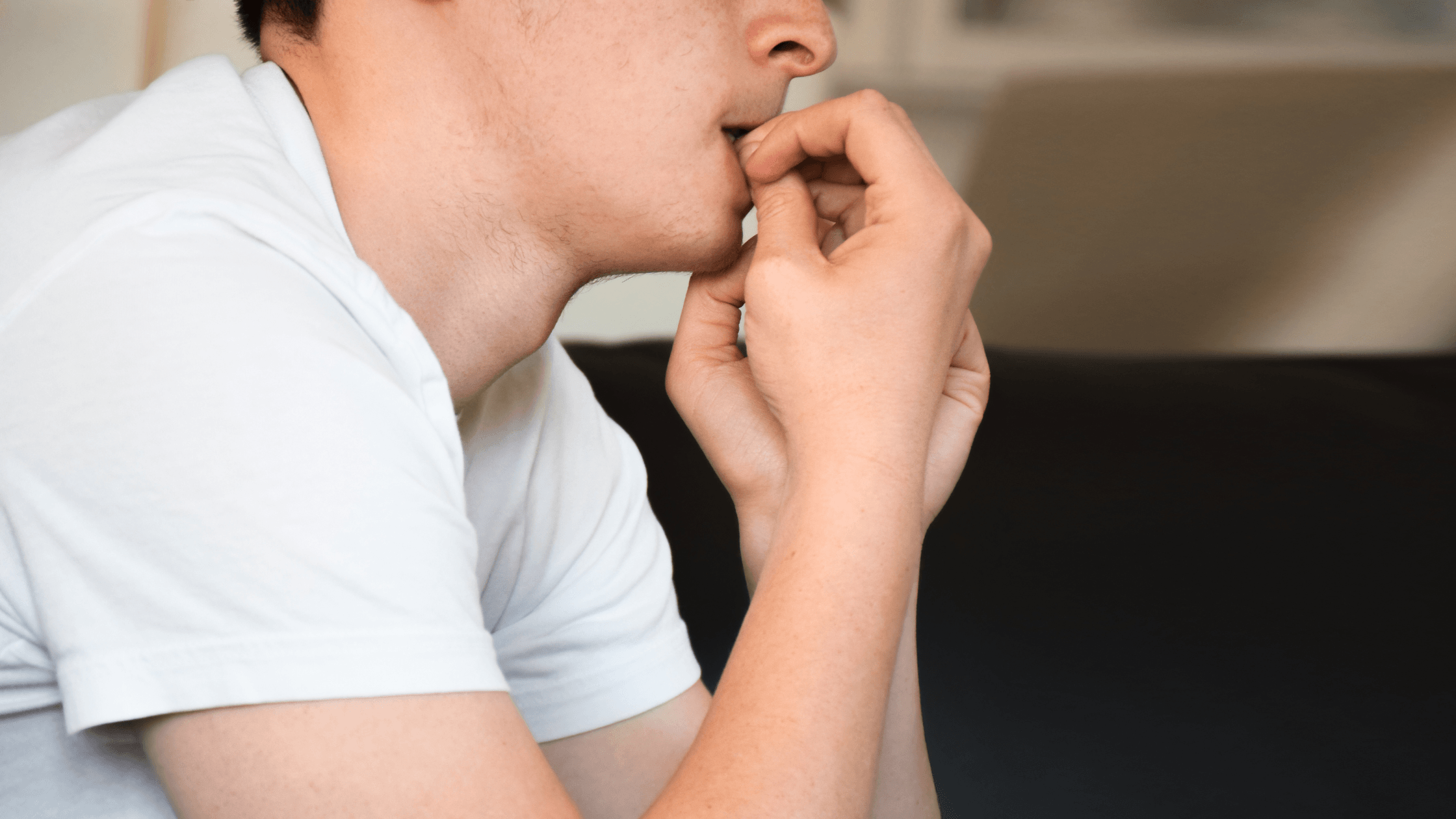
The tension builds before you even realize what’s happening. Your chest feels tight, your thoughts race, and you can’t settle into anything until you act out. For a few minutes afterward, the noise in your head goes quiet. Then the anxiety comes back, often worse than before, along with a fresh layer of shame about what you just did. If this cycle feels familiar, you’re experiencing something clinicians see often: sex addiction and anxiety feeding each other in a loop that neither resolves.
Sex Addiction and Anxiety: How Are They Connected?
Sex addiction and anxiety are connected in two directions at once. For many men, anxiety comes first, and compulsive sexual behavior develops as a way to manage it, since sexual arousal and release trigger a dopamine response that temporarily overrides anxious thoughts and physical tension.
For others, the addiction itself becomes the source of anxiety, as the secrecy, risk, and mounting consequences of compulsive sexual behavior create a constant undercurrent of dread.
Most men living with both conditions experience some combination of the two. Anxiety drives the behavior, and the behavior generates more anxiety, which then drives more of the behavior. Understanding this cycle is the first step toward treating it, since focusing on only one side of the loop tends to leave the other side fully intact.
The Self-Medication Cycle: Using Sex To Manage Anxiety
Sexual arousal activates the brain’s reward system and produces a rush of dopamine, the same neurochemical involved in most compulsive behaviors. For someone carrying chronic anxiety, that dopamine surge can feel like genuine relief, a brief window where racing thoughts quiet down, and physical tension eases.
This relief is real, but it’s also short-lived and unstable. Relying on sexual behavior to regulate anxiety trains the brain to expect that relief only through that specific channel, which makes it progressively harder to manage anxious moments any other way.
Over time, this pattern resembles what researchers call the self-medication hypothesis, in which a person turns to a behavior that eases a mental health symptom in the moment while making the underlying condition worse over the long run.
How the Addiction Cycle Creates New Anxiety
Even when anxiety isn’t the original driver, the addiction cycle itself generates plenty of its own. Compulsive sexual behavior almost always comes with secrecy, and maintaining that secrecy (hiding browser history, managing a separate version of your phone, avoiding certain conversations), requires constant low-grade vigilance. That vigilance is its own form of chronic anxiety, separate from whatever anxious patterns existed before the addiction took hold.
On top of that, the consequences of the behavior itself add fuel. Fear of discovery, worry about the impact on your relationship, and the accumulating weight of promises broken to yourself all contribute to a baseline anxiety that can feel impossible to escape without treatment.
Overlapping Symptoms That Make Both Conditions More Challenging To Spot
Anxiety and sex addiction share enough symptoms that one can mask the other, including:
- Restlessness or an inability to settle into calm, unstructured time
- Racing or intrusive thoughts that feel difficult to control
- Irritability or a short temper, especially under stress
- Sleep disruption, whether trouble falling asleep or waking frequently
- Avoidance of situations that trigger discomfort, whether social or emotional
- A persistent sense of dread that doesn’t attach to any single, identifiable cause
Because these symptoms overlap so heavily, many men don’t recognize how intertwined the two conditions actually are until they start working with a therapist familiar with both. Reviewing the broader picture of what constitutes compulsive sexual behavior can help you see how emotional distress and addictive behavior reinforce each other over time.
Why Anxiety Often Intensifies During Withdrawal
If you’ve tried to stop compulsive sexual behavior on your own, you’ve likely noticed that anxiety gets worse before it gets better. This isn’t a sign that something has gone wrong. It’s a predictable part of the process. Understanding the symptoms of sex withdrawal can help you recognize this spike in anxiety as a temporary, physiological response rather than proof that recovery isn’t working.
This spike happens because the brain has grown accustomed to regulating anxious energy through sexual behavior. Once that channel is removed, the underlying anxiety has nowhere immediate to go, which is why early recovery often feels more anxious, not less, before it improves.
The Role of Trauma in Both Conditions
Anxiety and compulsive sexual behavior frequently share a common root: unresolved trauma. Early experiences of neglect, instability, or emotional unavailability can leave the nervous system stuck in a state of chronic hyperarousal, the same physiological state that underlies much of clinical anxiety.
Understanding what causes sex addiction at the level of the brain and nervous system shows why anxiety and compulsive sexual behavior so often travel together rather than existing as two unrelated conditions.
This is part of why treatment approaches that only address behavior, without addressing the trauma underneath both conditions, tend to produce short-lived results. The anxiety keeps generating pressure toward the old coping mechanism until the root cause gets treated directly.
Why Treating Only One Condition Rarely Works
Treating anxiety without addressing compulsive sexual behavior often leaves the addiction fully intact, since the underlying urge to self-medicate remains. Treating the addiction alone, without addressing the anxiety driving it, tends to produce short-term behavior change that doesn’t hold, since the anxiety eventually resurfaces and looks for another outlet.
Genuine, lasting recovery usually requires treating both conditions together rather than sequentially. This matters enough that it’s worth understanding whether sex addiction qualifies as a mental illness in its own right, since that framing shapes how seriously co-occurring anxiety gets addressed alongside it in treatment.
What Integrated Treatment Looks Like
Effective treatment for co-occurring sex addiction and anxiety typically includes:
- A thorough assessment for anxiety alongside any assessment for compulsive sexual behavior, rather than treating one as secondary to the other
- Trauma-informed therapy that addresses the root causes behind both conditions, such as Begin Again Institute’s TINSA model
- Practical tools for managing anxious moments that don’t rely on sexual behavior, including grounding techniques and nervous system regulation skills
- Ongoing support and community, since isolation tends to intensify both anxiety and the addiction cycle
- Patience with the withdrawal process, understanding that a temporary rise in anxiety is common and expected rather than a sign of failure
Get Support for Co-Occurring Anxiety and Sex Addiction at BAI
At Begin Again Institute, we understand that sex addiction and anxiety rarely exist in isolation from each other.
Our 14-Day Men’s Intensive uses a trauma-informed approach to address the root causes behind both compulsive sexual behavior and the anxiety that often drives or accompanies it, giving you tools that address the whole picture rather than just the behavior on the surface.
You don’t have to keep managing this cycle alone. Contact us today to learn how our programs can help you find lasting relief from both.
Frequently Asked Questions
Can anxiety actually cause sex addiction?
Anxiety alone doesn’t guarantee that someone will develop a sex addiction, but it’s a significant contributing factor for many men. Using sexual behavior to manage anxious feelings can develop into a self-reinforcing cycle over time, especially without other healthy coping tools in place.
Why does anxiety get worse when I try to stop acting out?
This is a common and expected part of early recovery. Your brain has grown used to regulating anxious energy through sexual behavior, so removing that outlet temporarily leaves the underlying anxiety with nowhere immediate to go. This usually eases as you develop other ways to manage it.
Do I need to treat anxiety and sex addiction separately or together?
Most clinicians recommend treating both together rather than one at a time. Addressing only the addiction often leaves the underlying anxiety (and the urge to self-medicate) intact, while addressing only the anxiety can leave the addictive behavior pattern unaddressed.

Edward Tilton is a proven behavioral healthcare leader with an established track record in the recovery industry space. As an accomplished healthcare leader, Ed has diverse management experience including clinical and business operations, expansion of program development, and clinical service offerings.